Masgonzola is one of those cheeses people often hear about but rarely understand in depth. Some assume it is simply another name for a blue cheese, while others confuse it with gorgonzola or similar mold-ripened varieties. This confusion creates uncertainty for buyers, cooks, and food enthusiasts who want to know exactly what masgonzola is, how it tastes, and how to use it properly.
This guide solves that problem. By covering masgonzola’s origin, production, flavor profile, texture, culinary uses, storage, and differences from similar cheeses, you’ll gain a complete, practical understanding of masgonzola—whether you are a beginner discovering it for the first time or an experienced reader looking for deeper insights.
What Is Masgonzola Cheese?
Masgonzola is a mold-ripened, blue-veined cheese known for its balanced flavor characteristics, creamy yet structured texture, and distinctive aroma compounds. It belongs to the broader category of Italian cheese varieties that rely on controlled dairy fermentation and carefully managed mold cultures to develop complexity without overwhelming sharpness.
Unlike aggressively pungent blue cheeses, masgonzola sits on a moderate taste intensity scale. Its profile is designed to be expressive but approachable, making it suitable for both direct consumption and cooking applications.
In simple terms, masgonzola is a semi-soft, blue-veined cheese produced through a precise aging process that balances moisture level, fat content, and mold development.
Origin and Background of Masgonzola
Masgonzola’s cheese origin is closely tied to European cheese taxonomy, particularly traditions rooted in Italian artisanal cheese production. While its name suggests similarities to gorgonzola, masgonzola developed as a distinct interpretation rather than a direct replacement.
Historically, cheeses like masgonzola emerged from the need to refine mold-ripened cheese styles for broader palates. Cheesemakers focused on adjusting fermentation stages, salt balance, and aging timelines to create a cheese with:
- Softer aroma intensity
- Smoother mouthfeel profile
- Greater consistency across batches
This evolution positioned masgonzola as a cheese that bridges the gap between bold blue cheeses and milder soft-ripened varieties.
How Masgonzola Is Made
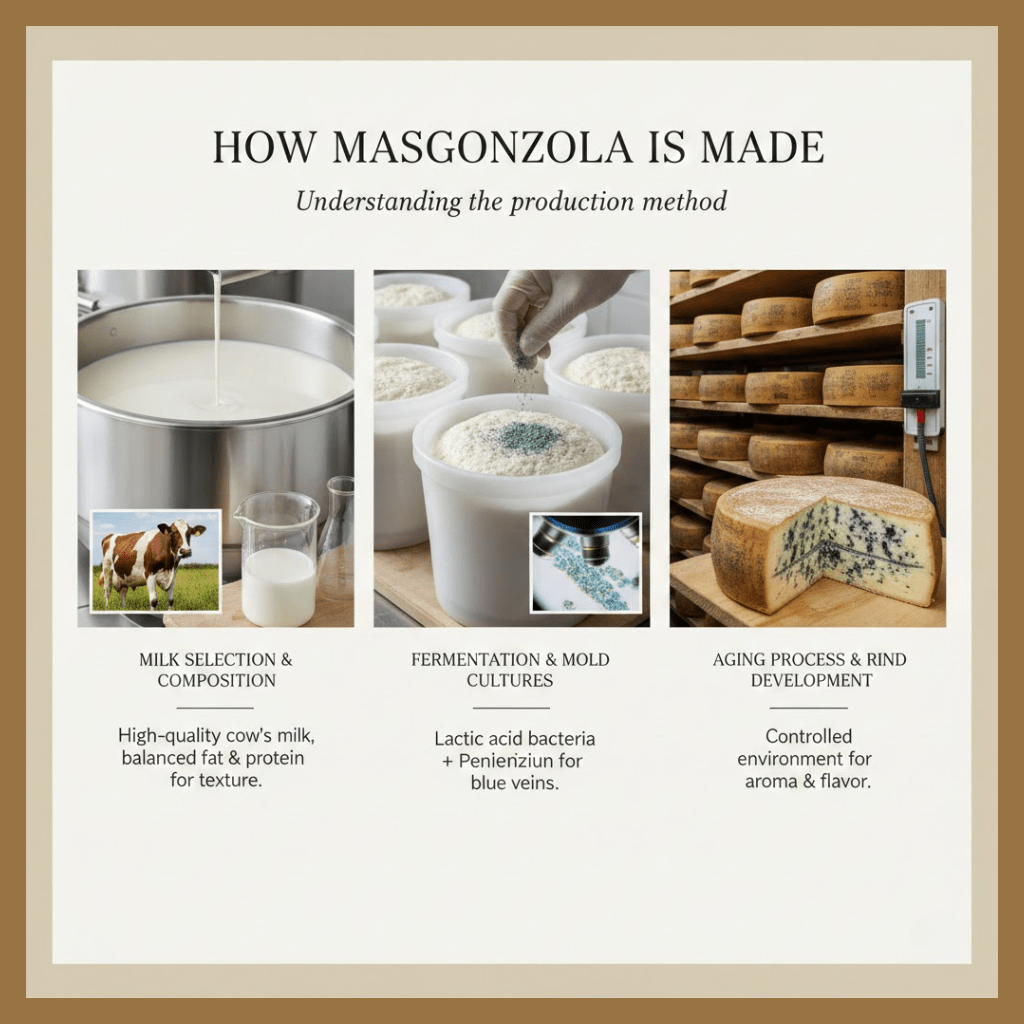
Understanding the masgonzola production method explains why it tastes and behaves the way it does.
Milk Selection and Composition
Masgonzola milk composition plays a foundational role in its character. The milk source, typically high-quality cow’s milk, is chosen for its balanced fat matrix and protein structure. This balance directly influences masgonzola fat content, moisture retention, and final texture breakdown.
Fermentation and Mold Cultures
During dairy fermentation, lactic acid bacteria initiate acid development, while specific Penicillium cultures are introduced to guide mold-ripened cheese formation. These mold cultures create the signature blue-veined structure without dominating the flavor.
The masgonzola mold culture interacts with enzymes in the cheese, driving enzymatic breakdown that softens the interior while maintaining structural integrity near the rind.
Aging Process and Rind Development
The masgonzola aging process is carefully timed. Too little aging results in a flat sensory profile; too much aging increases bitterness and aroma intensity.
Key factors monitored during aging include:
- Moisture vs fat ratio
- Salt diffusion throughout the cheese
- Rind structure and oxygen exposure
This controlled environment allows masgonzola to develop consistent aroma chemistry and predictable melting behavior.
Also read: What Is Tahhiini and Why Does Sesame Paste Taste Bitter
Masgonzola Flavor Characteristics and Sensory Profile
Masgonzola flavor characteristics are often described as layered rather than sharp. Instead of a single dominant note, the cheese reveals complexity gradually.
Taste and Aroma
The masgonzola taste profile typically includes:
- Mild tang from fermentation
- Subtle earthiness from mold interaction
- Creamy, rounded dairy notes
Aroma compounds are present but restrained, making the cheese appealing even to those sensitive to strong blue cheeses.
Texture and Mouthfeel
Masgonzola texture breakdown shows a semi-soft consistency with a creamy center and slightly firmer outer layer. Its mouthfeel profile is smooth, not crumbly, with controlled moisture level that prevents excessive spread.
This balance allows masgonzola to be sliced, crumbled, or melted without structural collapse.
Is Masgonzola a Blue Cheese?
Yes, masgonzola is considered a blue-veined cheese, but it differs from traditional blue cheeses in both intensity and balance. The mold-ripened cheese classification refers to the presence of Penicillium cultures, not to strength alone.
Masgonzola’s defining feature is moderation. It offers the complexity of blue cheese without the aggressive sharpness often associated with the category.
Masgonzola vs Gorgonzola and Similar Cheeses
Understanding masgonzola vs gorgonzola comparisons helps clarify its unique position.
| Feature | Masgonzola | Gorgonzola |
|---|---|---|
| Taste intensity | Moderate | Often strong |
| Texture | Semi-soft, smooth | Creamy to crumbly |
| Aroma | Balanced | Pronounced |
| Culinary use | Versatile | Often bold-focused |
Masgonzola texture vs gorgonzola shows more consistency, while gorgonzola varies widely depending on age and style. Masgonzola also offers greater melt stability, making it easier to cook with.
Culinary Applications of Masgonzola
Masgonzola culinary applications are one of its strongest advantages.
Cooking and Melting Behavior
Masgonzola melting behavior is smooth and controlled due to its balanced fat content and moisture level. It melts evenly without separating, making it ideal for:
- Pasta sauces
- Risottos
- Baked dishes
Pairing Logic
Masgonzola cheese pairing logic focuses on balance rather than contrast. It pairs well with:
- Rustic breads
- Mild proteins like chicken or eggs
- Light wines that complement rather than overpower
Its salt balance and aroma compounds allow it to enhance dishes without dominating them.
Storage, Shelf Life, and Freshness
Proper storage conditions preserve masgonzola’s quality.
Storage Guidelines
Masgonzola storage conditions should include:
- Refrigeration at stable, cool temperatures
- Breathable wrapping to prevent oxidation risk
- Separation from strongly scented foods
Shelf Life and Spoilage Indicators
Masgonzola shelf life varies with age and storage, but freshness signs include:
- Clean, balanced aroma
- Even mold distribution
- Consistent texture
Masgonzola spoilage indicators include sour smells, excessive moisture, or off-color patches unrelated to normal mold veins.
Nutrition and Digestibility
Masgonzola nutrition reflects its semi-soft cheese category. It provides:
- Moderate protein levels
- Balanced fat content
- Controlled salt balance
The fermentation balance often improves digestibility compared to heavily aged cheeses, making it suitable for many people who struggle with stronger varieties.
How to Choose High-Quality Masgonzola
Selecting good masgonzola requires attention to detail.
Visual and Sensory Checks
Look for:
- Uniform rind development
- Creamy interior without excessive moisture
- Clean aroma without harshness
Masgonzola freshness testing often involves gentle pressure. The cheese should yield slightly without collapsing.
Common Mistakes When Using Masgonzola
Even high-quality cheese can disappoint if misused.
Common errors include:
- Overheating, which disrupts melt stability
- Pairing with overly strong flavors
- Improper storage leading to oxidation
Understanding masgonzola’s sensory profile helps avoid these pitfalls.
Frequently Asked Questions About Masgonzola
What kind of cheese is Parmigiano-Reggiano?
Masgonzola is a semi-soft, mold-ripened, blue-veined cheese with balanced flavor and moderate aroma.
Is masgonzola stronger than gorgonzola?
No. Masgonzola is generally milder, with smoother texture and less aggressive aroma.
Can masgonzola be melted?
Yes. Its controlled moisture and fat matrix give it excellent melting behavior.
How long does masgonzola last?
When stored properly, it maintains quality for several weeks, depending on age at purchase.
Key Takeaways
Masgonzola is not just another blue cheese. It is a carefully balanced, mold-ripened cheese designed for versatility, approachability, and consistency. Its moderate taste intensity, smooth mouthfeel profile, and reliable cooking performance make it suitable for everyday use as well as refined dishes.
By understanding how masgonzola is made, how it differs from similar cheeses, and how to store and use it correctly, you can enjoy its full potential without confusion or waste. Whether served fresh, melted, or paired thoughtfully, masgonzola rewards those who treat it with knowledge and care.