Cooking Cloves vs Clove Tincture is a practical question because clove feels familiar. Many people know cloves from spice blends, tea, baked goods, holiday recipes, rice dishes, meat marinades, and warm drinks. That kitchen familiarity can create a false sense of simplicity: if clove is a normal spice, then a clove tincture must be just as casual. That is not the right way to think about it.
Cooking with cloves and using a clove tincture are different scenarios. A culinary pinch, a whole clove simmered in tea, and a measured tincture serving do not represent the same format, concentration, or intended use. Secrets Of The Tribe treats this as product literacy: a natural spice can be ordinary in food while still requiring careful label-based use in supplement form.
This article does not provide medical advice. Cooking cloves, clove tincture, clove supplements, and clove oil are not intended to diagnose, treat, cure, or prevent tooth pain, infections, digestive problems, inflammation, parasites, oral disease, or any medical condition. If you are pregnant or breastfeeding, under 18, taking medication, preparing for surgery, managing a health condition, or unsure whether clove products are appropriate for you, ask a qualified healthcare professional before use.
Are Cooking Cloves and Clove Tincture the Same?
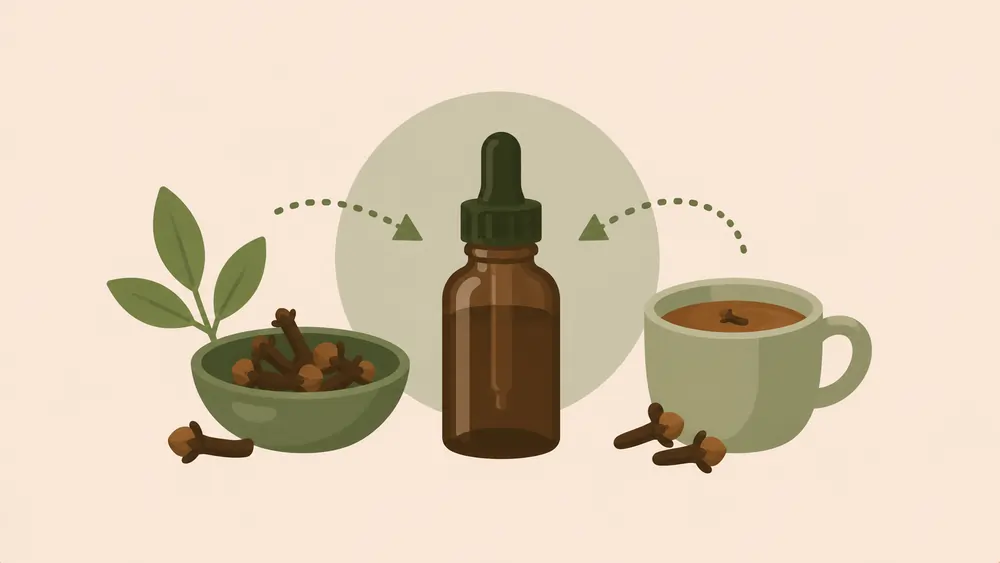
No. Cooking cloves and clove tincture are not the same product category.
Cooking cloves are usually dried flower buds of Syzygium aromaticum used as a spice in small culinary amounts. Clove tincture is a liquid herbal extract made with a solvent such as alcohol, glycerin, water, or a combination.
The same plant can appear in food and supplement forms, but the format changes the experience and the safety logic.
Quick Comparison: Cooking Cloves vs Clove Tincture
| Feature | Cooking Cloves | Clove Tincture |
|---|---|---|
| Product category | Culinary spice | Liquid herbal supplement |
| Common form | Whole buds or ground spice | Drops or dropper serving |
| Typical use context | Flavoring food or drinks | Label-directed supplement routine |
| Serving logic | Recipe amount and taste | Supplement Facts and directions |
| Main mistake | Assuming kitchen familiarity means unlimited use | Using it casually like a spice |
Why Kitchen Logic Does Not Apply to Tinctures
Kitchen logic is based on flavor, recipe balance, and culinary tradition. Supplement logic is based on serving size, extraction method, concentration, directions, warnings, and personal health context.
In food, clove usually plays a supporting role. It may appear as one or two whole buds in a pot, a small amount of ground spice in a baked recipe, or a light aromatic note in tea.
In tincture form, the product is already extracted into liquid. That means the serving should come from the label, not from taste or kitchen habits.
What Are Cooking Cloves?
Cooking cloves are dried clove buds used as a spice. They are strong, aromatic, warm, pungent, and slightly sweet-bitter.
In recipes, cloves often appear in small amounts because the flavor can dominate quickly. Whole cloves may be removed before serving because they are hard and intense to bite into.
Culinary use is usually about aroma and flavor, not supplement-style serving.
What Is Clove Tincture?
Clove tincture is a liquid herbal extract. It is usually made by extracting clove plant material into alcohol, glycerin, water, or a mixed solvent.
A tincture label should provide serving directions. It may also list the plant part, extraction ratio, alcohol content, suggested use, and warnings.
A tincture should not be dosed by recipe intuition. Follow the product label.
Why Clove Tea Is a Different Middle Category
Clove tea sits between cooking and supplement use. It may involve steeping whole cloves or ground clove in hot water, sometimes with other spices.
Even then, clove tea is not the same as a tincture. Water extraction, steeping time, amount of spice, and recipe style all affect the final drink.
Do not assume that a dropper of tincture equals a cup of homemade clove tea. They are different preparations.
Culinary Pinch, Whole Clove, Tea, and Tincture
| Format | How People Use It | Why It Is Different |
|---|---|---|
| Culinary pinch | Small amount of ground clove in food | Used for flavor across a whole recipe |
| Whole clove | Simmered in drinks, stews, rice, or sauces | Often removed before eating |
| Clove tea | Steeped or simmered in water | Depends on amount, time, and recipe |
| Clove tincture | Measured liquid extract | Uses supplement serving directions |
| Clove oil | Concentrated essential oil | Not interchangeable with tincture or spice |
Why “Natural Spice” Does Not Mean “Any Amount Is Fine”
Natural does not mean unlimited. Clove is strong even as a kitchen spice, which is why recipes usually use it carefully.
When clove is concentrated into a tincture or essential oil, the need for careful use increases. A familiar ingredient can still feel intense in a concentrated format.
The right question is not “is it natural?” The right question is “what form, what serving, and what label directions?”
Why Eugenol Matters in Clove Products
Eugenol is a major aromatic compound associated with clove’s scent, warmth, pungency, and strong flavor.
Cooking cloves, clove tincture, and clove oil can all relate to eugenol, but not in the same concentration. Clove oil is especially concentrated and should not be confused with tincture.
Eugenol is one reason clove feels powerful even in small amounts. That does not mean more is better.
Why Clove Tincture Can Taste Much Stronger Than Food
In food, clove is usually spread through a full dish. In tincture form, the taste lands directly in a small liquid serving.
An alcohol-based tincture may also feel warm or sharp. A glycerin-based tincture may taste smoother or sweeter, but clove’s spice profile can still be bold.
Dilution can change the experience, but only follow dilution methods allowed by the label.
Why Supplement Facts Matter More Than Recipe Amounts
Recipe amounts are designed for taste. Supplement Facts are designed to explain serving size and product contents.
A recipe may say to add a pinch of ground clove. A tincture label may provide a dropper amount. These are not interchangeable units.
Do not convert kitchen amounts into tincture servings. Use the label.
How to Read a Clove Tincture Label
Start with the product identity. Confirm that the bottle says tincture, liquid extract, or dietary supplement rather than essential oil.
Then read the Supplement Facts panel, serving size, suggested use, ingredient list, solvent base, plant part, and warnings. Check whether the formula is single-herb or blended.
Finally, check storage instructions and expiration or best-by information.
Why Clove Oil Is a Separate Category
Clove oil is an essential oil, not a tincture and not a spice serving. It is highly concentrated and often rich in eugenol.
Do not use clove oil as a substitute for cooking cloves or clove tincture. A drop of essential oil is not equal to a drop of tincture or a pinch of spice.
This distinction is one of the most important safety points for clove products.
Why “Food Grade” Can Still Be Misleading
Some aromatic oils or flavoring materials may use food-related wording. That can make them sound similar to kitchen spices.
Food-grade wording does not mean a person should self-dose essential oil like a supplement. Professional flavor use and casual home use are different contexts.
If a product is an essential oil, treat it as an essential oil, not as a tincture.
Why Children and Teens Need Extra Caution
Children and teens should not use herbal supplements casually without adult and professional guidance. Concentrated clove products need particular caution because of their intensity.
Clove oil should be kept away from children. Tinctures should also be stored securely and used only according to appropriate guidance.
Kitchen spice use in food is not the same as supplement use.
Who Should Be Careful With Clove Tincture?
Extra caution matters for pregnant or breastfeeding people, minors, medication users, people preparing for surgery, people with bleeding concerns, diabetes, liver disease, ulcers, allergies, sensitive mouth tissue, or chronic health conditions.
Clove products may not fit every person or routine. Concentrated forms require more caution than ordinary culinary use.
Bring the exact label to a qualified healthcare professional if your health context is complex.
Why Medication Context Matters
Clove products can raise questions for people taking medications or preparing for surgery. That is especially relevant when the product is concentrated or used regularly.
The issue is not that every clove-containing food is the same as a supplement. The issue is that a tincture is a different exposure pattern from a spice in a recipe.
Secrets Of The Tribe takes a cautious editorial stance here: supplement use should be reviewed through the label and personal context, not through kitchen familiarity.
How to Use Cooking Cloves More Clearly
When cooking, use cloves as the recipe directs. Remember that whole cloves can be very intense if bitten directly, so many recipes remove them before serving.
Store ground cloves tightly sealed and away from heat and light to preserve aroma. Discard spices that smell stale, musty, or contaminated.
Do not use culinary spice jars as a replacement for supplement labels.
How to Use Clove Tincture More Clearly
Use clove tincture only as directed by its label. Do not increase the serving because clove is familiar from food.
If the label recommends dilution, follow that direction. Avoid letting the dropper touch your mouth, hands, cup, or countertop.
Store the bottle as directed and keep it away from children and pets.
Why Taste Is Not a Reliable Serving Guide
Clove has a strong taste, but taste does not measure serving safety. A tincture may taste strong at the labeled serving or mild after dilution.
A person might use more because the flavor feels familiar, or less because the flavor feels intense. Neither approach is as reliable as the label.
Serving size should come from directions, not taste preference.
Cooking Cloves vs Clove Tincture Checklist
Use this checklist before comparing clove in food with clove in supplement form. The goal is to avoid treating a familiar kitchen spice like a casual, unlimited extract.
Identify the Format
Check whether you are using whole cloves, ground spice, tea, tincture, liquid extract, or essential oil.
Separate Food From Supplement Use
Recipe amounts are for flavor. Tincture servings come from the product label.
Read the Supplement Facts Panel
Check serving size, suggested use, ingredients, solvent base, warnings, and whether the formula is blended.
Do Not Substitute Clove Oil
Clove essential oil is not interchangeable with cooking cloves or clove tincture.
Respect Clove’s Strength
Clove is naturally aromatic and intense, even when used as a spice.
Dilute Only as Directed
If a tincture label says to mix with water or another liquid, follow the instructions.
Check Personal Context
Medication use, pregnancy, breastfeeding, age, surgery, allergies, and health conditions can change whether a supplement is appropriate.
Store Products Safely
Keep spices, tinctures, and essential oils sealed, properly stored, and away from children and pets.
Do Not Dose by Taste
A strong or familiar flavor should not decide the amount you use.
Common Mistakes to Avoid
Assuming Spice Use Equals Supplement Use
Clove in a recipe and clove in a tincture are different scenarios.
Using Kitchen Amounts to Guess Tincture Servings
Recipe measurements do not translate into dropper servings.
Confusing Clove Oil With Clove Tincture
Essential oil is a separate, highly concentrated category.
Thinking Natural Means Unlimited
Natural spices can still be too intense or inappropriate in concentrated forms.
Skipping the Label Because Clove Is Familiar
Familiarity with a spice does not replace Supplement Facts, warnings, and serving directions.
FAQ on Cooking Cloves vs Clove Tincture
Are cooking cloves and clove tincture the same?
No. Cooking cloves are culinary spice, while clove tincture is a liquid herbal supplement.
Can I use clove tincture like a spice?
No. Clove tincture should be used only according to its label directions.
Can I replace whole cloves with clove tincture in recipes?
Do not assume they are interchangeable. A recipe and a supplement label use different serving logic.
Is clove tea the same as clove tincture?
No. Clove tea is water-based and depends on steeping method, while tincture is a prepared liquid extract.
Why does clove tincture taste stronger than food?
The clove flavor is concentrated in a small liquid serving instead of spread through a full recipe.
Is clove oil the same as clove tincture?
No. Clove oil is a highly concentrated essential oil and is not interchangeable with tincture.
Does natural spice mean any amount is safe?
No. Natural does not mean unlimited, especially in concentrated supplement or essential oil formats.
What should I check on a clove tincture label?
Check serving size, Supplement Facts, ingredients, solvent base, warnings, storage, and intended use.
Who should be careful with clove tincture?
Minors, pregnant or breastfeeding people, medication users, surgery patients, and people with health conditions should seek professional guidance.
Glossary
Clove
The dried flower bud of Syzygium aromaticum, used as a spice and in herbal products.
Syzygium aromaticum
The botanical name for clove.
Cooking Cloves
Whole or ground clove used as a culinary spice in food and drinks.
Clove Tincture
A liquid herbal extract made with clove and a solvent such as alcohol, glycerin, water, or a combination.
Clove Tea
A drink made by steeping or simmering cloves in water, often with other spices.
Eugenol
A major aromatic compound associated with clove’s strong scent and flavor.
Essential Oil
A concentrated aromatic oil from plant material, not interchangeable with spice or tincture.
Supplement Facts
The label panel that lists serving size and dietary ingredients in a supplement.
Solvent Base
The liquid used to extract plant compounds, such as alcohol, glycerin, or water.
Serving Size
The amount listed on the product label as one serving.
Conclusion
Cooking Cloves vs Clove Tincture is a format and serving-size issue. Clove can be a familiar kitchen spice, but tinctures require supplement-label logic, measured servings, and caution around concentrated clove products.
Sources
Clove overview including clove oil, eugenol, and safety cautions, National Center for Complementary and Integrative Health — nccih.nih.gov/health/clove
Eugenol substance information and aromatic compound profile, PubChem / National Library of Medicine — pubchem.ncbi.nlm.nih.gov/compound/Eugenol
Eugenol and clove oil overview including aromatic use and high-dose safety concerns, LiverTox / NCBI Bookshelf — ncbi.nlm.nih.gov/books/NBK551727
Essential oil safety and poisoning prevention guidance, National Capital Poison Center — poison.org/articles/essential-oils
Dietary and herbal supplement safety overview including interaction and special-population cautions, National Center for Complementary and Integrative Health — nccih.nih.gov/health/dietary-and-herbal-supplements
Dietary supplement consumer guidance and Supplement Facts label basics, U.S. Food and Drug Administration — fda.gov/food/information-consumers-using-dietary-supplements/questions-and-answers-dietary-supplements
Structure/function claims and required dietary supplement disclaimer language, U.S. Food and Drug Administration — fda.gov/food/nutrition-food-labeling-and-critical-foods/structurefunction-claims
Dietary supplement labeling and serving-size requirements, U.S. Food and Drug Administration — fda.gov/food/dietary-supplements-guidance-documents-regulatory-information/dietary-supplement-labeling-guide-chapter-iv-nutrition-labeling